
How Low Cost Drones Changing Modern Warfare
In February 2026, a brief encounter over the Arabian Sea captured a defining shift in modern warfare. An Iranian Shahed drone approached the USS Abraham Lincoln carrier strike group during rising tensions in the Middle East. Within minutes, a United States Navy F 35C fighter jet launched from the deck and destroyed the incoming drone.
Operationally, the response was swift and precise. Strategically, it revealed something deeper.
A drone priced lower than a luxury car compelled the deployment of one of the most expensive fighter jets in the world, flying from a nuclear powered aircraft carrier worth billions. That exchange was not just a tactical interception. It was a case study in defence economics.
Low cost military drones are changing the rules of air power. They are forcing advanced militaries to spend heavily just to neutralise relatively cheap threats. For India, which is expanding its indigenous drone manufacturing and defence production ecosystem, the implications are enormous.
The Rise of the Shahed Drone Model
Iran's drone strategy is not based on cutting edge technology alone. It is built around simplicity, scale, and cost discipline. The Shahed series of loitering munitions reflects this philosophy clearly.
These drones are designed to be manufactured quickly and in large numbers. They use lightweight composite airframes and simple piston engines adapted from commercial designs. Navigation systems rely on satellite guidance with inertial backup. The focus is not on stealth or extreme speed. It is on range, affordability, and reliability.
With operational ranges that can exceed two thousand kilometres, these drones can travel long distances at modest cruising speeds. Production costs are estimated between twenty thousand and fifty thousand dollars per unit.
At that price, drones become expendable. They are tools of attrition. They are not protected assets. They are meant to be used, lost, and replaced.
This philosophy transforms how conflict is approached. When drones are cheap and plentiful, the attacker gains economic leverage. Military experts argue that the FPV Drone Exposed the Future of Modern Warfare by proving how inexpensive, first-person-view technology can challenge traditional armored vehicles.
How Low Cost Drones Disrupt Defence Economics
Modern air defence systems are designed to protect high value targets such as aircraft carriers, oil facilities, and military bases. Interceptors, surface to air missiles, and fighter jets are engineered for precision and effectiveness. But they are expensive.
Consider the economic imbalance. A loitering munition costing less than fifty thousand dollars can force the launch of interceptor missiles that cost between one and four million dollars each. Even if every drone is destroyed, the defender bleeds financially.
This cost asymmetry is not accidental. It is strategic.
By deploying swarms of low cost drones, an attacker can saturate air defence networks. Even the most advanced radar systems and missile batteries can be strained if enough targets appear simultaneously. The defender must respond every time. The attacker needs only a few successes to achieve impact.
In Ukraine and across the Middle East, loitering munitions and FPV drones have demonstrated this dynamic repeatedly. They have targeted energy infrastructure, ammunition depots, and logistical hubs. Even when intercepted, they force continuous readiness and high operational spending.
The sound of their engines, often described as a persistent buzzing, has become a psychological factor in conflict zones. These drones create pressure not only through destruction but through anticipation.
Lessons for India Defence Strategy
India faces a complex security environment, with long land borders and vast maritime responsibilities. Traditional military assets such as fighter aircraft and missile systems remain essential. But the rise of low cost military drones demands a parallel strategy.
India's drone industry has grown rapidly in recent years. Government reforms, production linked incentives, and import restrictions have encouraged domestic manufacturing. Today, hundreds of Indian drone companies operate across defence, agriculture, surveillance, and logistics.
The focus is increasingly shifting toward indigenous defence drones, FPV drones, and loitering munitions that can be produced at scale.
Recent operational experiences and border tensions have accelerated this shift. The armed forces are investing in tactical drones at the unit level. Drone platoons are being formed. Dedicated training centres are expanding capacity. Procurement processes are being streamlined to support Indian manufacturers.
The emphasis is clear. India must not rely solely on high value imported systems. It must build a layered approach that includes affordable and replaceable drones.
The Importance of Mass Production
One of the most critical lessons from the Shahed model is the importance of production lines over prototypes.
Many emerging defence startups focus on designing advanced platforms with cutting edge features. Innovation is essential. But in a prolonged conflict scenario, manufacturing capacity becomes decisive.
A capable drone that cannot be produced in large numbers offers limited strategic value. On the other hand, a reliable and affordable drone that can be manufactured rapidly provides resilience.
India has strengths that can support this shift. The country possesses a large engineering workforce, growing electronics manufacturing capacity, and strong software talent. If these elements are integrated effectively, India can build cost effective military drones tailored to its terrain and operational needs.
Reducing Component Dependence
Despite progress, structural challenges remain. A significant portion of drone electronics and critical components are still imported. This creates vulnerabilities in supply chains and cost structures.
For true defence self reliance, India must expand domestic production of flight controllers, propulsion systems, communication modules, and sensors. Building modular drone architectures can also reduce dependency and improve scalability.
Using commercial components smartly does not weaken capability. Iran example shows that commercially available technologies, when integrated effectively, can deliver battlefield impact. India, with legal access to global supply chains and expanding semiconductor initiatives, is well positioned to adapt this approach.
The Growing Role of FPV Drones
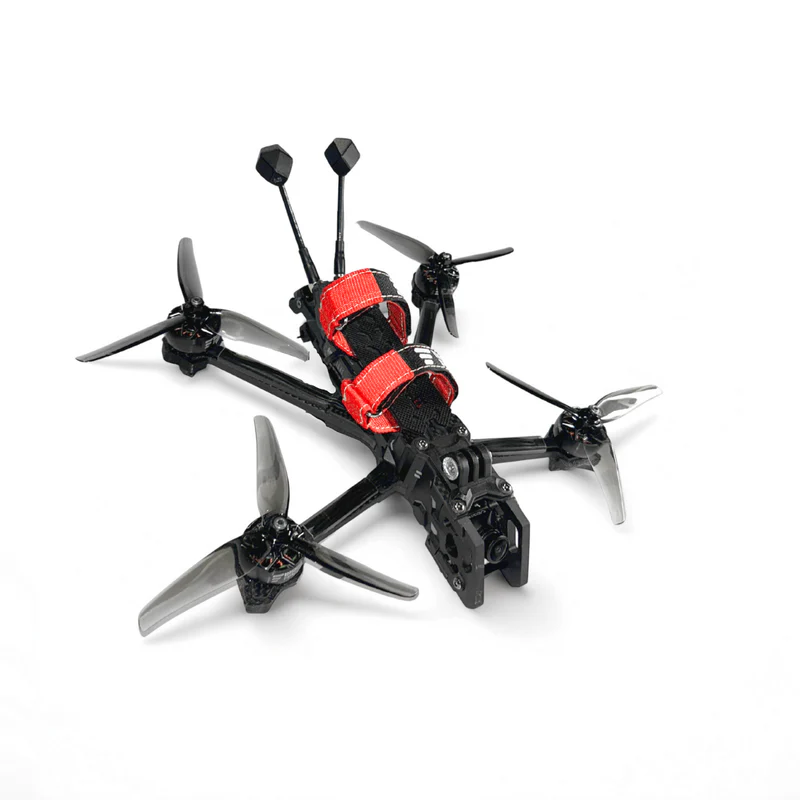
FPV drones, or first person view drones, have become central to modern battlefield tactics. These drones are small, agile, and relatively inexpensive. They are often used for reconnaissance, surveillance, and precision strike roles.
Unlike large unmanned aerial vehicles that require significant infrastructure, FPV drones can be deployed quickly and operated by small teams. They are ideal for counter terrorism operations, border surveillance, and tactical engagements.
Because they are affordable, losses do not cripple operational capacity. Units can deploy multiple drones simultaneously, increasing situational awareness and strike flexibility.
For Indian defence forces, scaling FPV drone manufacturing can strengthen deterrence and responsiveness without imposing unsustainable costs.
Swarm Drones and the Future of Warfare
The next major shift lies in swarm drone capability. Swarm drones operate in coordinated groups, sharing information and adjusting flight paths collectively. Instead of relying on a single sophisticated platform, swarms rely on numbers and coordination.
Swarm technology can overwhelm traditional air defence systems by presenting multiple simultaneous threats. Even if many are intercepted, some may penetrate defences.
India software expertise and artificial intelligence talent provide a strong foundation for developing swarm control systems. Mesh networking, autonomous navigation, and distributed decision making are areas where domestic innovation can thrive.
Building affordable drones that can operate in coordinated formations could redefine India future defence posture.
Strategic Advantages for India
India enters this evolving landscape with several advantages.
It has a vast domestic market that supports economies of scale. It has access to global markets seeking alternatives to certain foreign drone suppliers. It has policy support encouraging indigenous defence manufacturing. And it has a growing culture of innovation in aerospace and robotics.
Export potential is significant. Many countries are seeking reliable and cost effective military drones that are not tied to restrictive geopolitical conditions. Indian manufacturers can fill this space by offering scalable and terrain specific solutions.
The Arabian Sea incident highlighted that the future of warfare is not determined solely by technological sophistication. It is shaped by who can sustain operations economically.
Balancing Quality and Quantity
Advanced fighter jets, aircraft carriers, and missile systems remain essential pillars of national security. They provide deterrence and power projection. But they must be complemented by large numbers of affordable drones.
The strategic equation is no longer about choosing between high end platforms and low cost systems. It is about integration.
India's defence planning must ensure that expensive assets are protected by layers of surveillance drones, counter drone systems, and tactical FPV units. This layered approach can neutralise threats before they escalate into high cost engagements.
The Real Economic Lesson
The interception of a low cost drone by an advanced fighter aircraft symbolised the tension between traditional military doctrine and emerging realities.
Modern warfare rewards those who can build, deploy, and replace systems at scale. Industrial capacity becomes as important as battlefield tactics.
For India drone industry, the message is straightforward. Success will not be defined only by technological breakthroughs. It will depend on manufacturing efficiency, supply chain resilience, and affordability.
Low cost military drones, FPV drones, swarm drones, and indigenous defence manufacturing are no longer optional trends. They are strategic necessities.
As India strengthens its position in the global drone market, the opportunity is not merely to catch up. It is to lead in a domain where scale, cost control, and smart engineering matter as much as sophistication.
The skies over the Arabian Sea offered a brief but powerful lesson. In the age of drones, the side that can sustain production and adapt quickly holds the advantage. For India, embracing this reality could shape the future of its defence modernisation and its standing in the global military drone industry.

 English
 Arabic
 French
 Spanish
 Portuguese
 Deutsch
 Turkish
 Dutch
Dutch
 Russian
 Romaian
 Portuguese (Brazil)
 Greek
Greek