
Writing MATLAB Programs for Seismic Data Analysis
Introduction to MATLAB in Seismic Data Analysis
Seismic data analysis plays a crucial role in understanding the Earth's subsurface structures, predicting earthquakes, and designing resilient infrastructure. MATLAB has emerged as a preferred tool for geophysicists and engineers due to its powerful computational capabilities, intuitive visualization tools, and extensive library of functions tailored for numerical and signal processing tasks. Writing MATLAB programs for seismic data analysis enables researchers to efficiently handle large datasets, implement advanced algorithms, and produce insightful visualizations that can guide decision making in both academic and professional contexts.
The first step in leveraging MATLAB for seismic studies involves understanding the structure of seismic datasets. These datasets typically contain time series recordings of ground motion collected from seismometers. MATLAB’s ability to process matrix and vector data makes it ideal for performing tasks such as filtering noise, identifying waveform patterns, and conducting frequency domain analysis. By developing customized MATLAB scripts, analysts can automate repetitive tasks, apply consistent processing steps across multiple datasets, and explore complex seismic phenomena that would be difficult to analyze manually.
Key Techniques for Writing MATLAB Programs for Seismic Data
Developing effective MATLAB programs for seismic data analysis requires a systematic approach that combines domain knowledge with programming best practices. One fundamental technique is data preprocessing, which includes loading raw seismic recordings, handling missing values, and normalizing signals for further analysis. MATLAB provides functions such as readtable, load, and filtfilt that allow users to manage large datasets efficiently while minimizing the risk of introducing errors during preprocessing. Proper preprocessing ensures that subsequent analyses, such as spectral decomposition or waveform cross correlation, yield accurate and meaningful results.
Another essential technique is the implementation of signal processing algorithms. Seismic signals are often contaminated by noise, requiring the use of filters to isolate meaningful events. MATLAB supports a variety of filtering methods, including band pass, high pass, and low pass filters, as well as more advanced techniques like wavelet transforms. By writing modular programs that separate data loading, filtering, and visualization, analysts can create reproducible workflows that are easy to debug and extend for new types of seismic data.
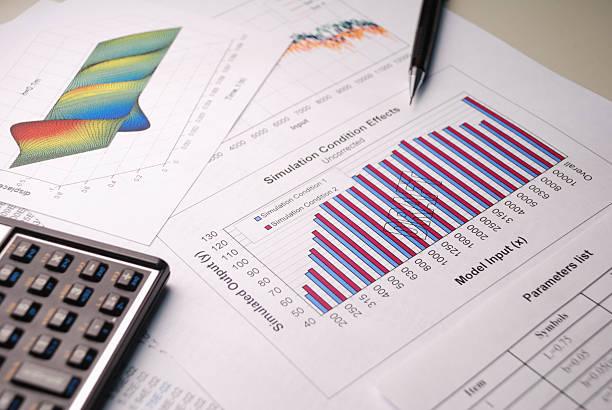
Visualization also plays a central role in MATLAB based seismic analysis. Plotting waveforms, spectrograms, and 3D subsurface models allows researchers to detect patterns that may not be evident from raw data alone. MATLAB’s plotting functions, such as plot, imagesc, and surf, can be combined with annotations and color maps to enhance interpretability. By automating visualization through scripts, analysts can quickly generate consistent figures for reports, presentations, or publications.
For students or researchers seeking additional guidance in technical programming or data analysis, resources such as bioinformatics assignment writing help provide structured support in developing complex coding solutions and analytical workflows.
Implementing Advanced MATLAB Functions for Seismic Analysis
Beyond basic preprocessing and visualization, MATLAB offers advanced functions that can be leveraged to perform sophisticated seismic analyses. One such area is spectral analysis, which examines the frequency content of seismic signals. Using Fast Fourier Transform (FFT) algorithms in MATLAB, analysts can convert time domain data into the frequency domain, allowing for the identification of dominant frequencies associated with specific seismic events. This information is valuable in differentiating between natural earthquakes and anthropogenic vibrations, as well as in assessing the resonance characteristics of buildings or soil layers.
Waveform correlation is another powerful technique that can be implemented in MATLAB. By comparing seismic signals from different sensors or events, researchers can identify repeating patterns and estimate the location of seismic sources. MATLAB functions such as xcorr enable the calculation of cross correlation coefficients, while matrix operations facilitate batch processing of multiple signal pairs. Combining these capabilities with automated plotting allows for rapid interpretation of complex datasets.
Seismic inversion and tomography are further applications where MATLAB excels. These processes involve estimating subsurface properties, such as velocity structures or fault geometry, based on observed seismic data. By writing scripts that integrate numerical optimization algorithms and iterative computation, researchers can model subsurface features with increasing accuracy. MATLAB’s computational efficiency and built in optimization toolboxes make it feasible to handle large scale problems that would otherwise require extensive computational resources.
Best Practices for MATLAB Program Design in Seismology
To maximize efficiency and maintainability, it is essential to follow best practices when writing MATLAB programs for seismic data analysis. Modular programming is highly recommended, as it allows each function to perform a specific task, such as filtering, plotting, or statistical analysis. This approach simplifies debugging and makes it easier to update scripts as new analytical methods or data formats become available.
Proper documentation is equally important. Clear comments, descriptive variable names, and structured function headers not only improve code readability but also facilitate collaboration among research teams. MATLAB supports the creation of custom functions and scripts with embedded documentation, enabling others to understand the workflow and replicate results with minimal guidance.
Optimization and computational efficiency should also be considered, especially when dealing with large seismic datasets. Vectorization, preallocation of arrays, and avoiding unnecessary loops can significantly reduce runtime. MATLAB’s profiler tool helps identify bottlenecks and optimize code performance, ensuring that even complex analyses can be completed in a reasonable timeframe.
Applications and Future Trends in Seismic Data Programming
MATLAB programming for seismic analysis extends beyond academic research into practical applications such as earthquake early warning systems, structural health monitoring, and resource exploration. Automated MATLAB scripts can process continuous seismic streams in near real time, detecting anomalies and issuing alerts that could prevent property damage and save lives. In industrial contexts, MATLAB based seismic analysis is used to monitor drilling operations, evaluate reservoir integrity, and optimize extraction methods.
Emerging trends include the integration of machine learning techniques with MATLAB based seismic analysis. By training models on large seismic datasets, researchers can automate event classification, predict aftershock sequences, and identify subtle patterns that traditional signal processing might overlook. MATLAB’s machine learning and deep learning toolboxes simplify the implementation of these advanced methods, providing a bridge between classical geophysics and modern data science.
Another promising area is cloud based seismic analysis. By leveraging MATLAB’s compatibility with cloud computing platforms, large datasets can be processed and shared collaboratively across institutions. This enables global seismic networks to function more efficiently, enhancing both research and public safety outcomes.
Conclusion
Writing MATLAB programs for seismic data analysis is a multidisciplinary endeavor that combines geophysical knowledge, programming expertise, and analytical creativity. From data preprocessing and filtering to advanced spectral and inversion techniques, MATLAB provides a versatile environment for researchers and engineers to explore complex seismic phenomena. By following best practices in program design, documentation, and optimization, analysts can develop reproducible and efficient workflows that generate meaningful insights from seismic datasets.
As technology continues to evolve, integrating machine learning, cloud computing, and automated visualization into MATLAB based seismic workflows will further enhance our ability to understand and respond to Earth’s dynamic processes. For anyone entering the field, mastering MATLAB programming offers both practical skills and a platform for innovation, bridging the gap between raw seismic data and actionable scientific knowledge.

 English
 Arabic
 French
 Spanish
 Portuguese
 Deutsch
 Turkish
 Italiano
 Russian
 Romaian
 Portuguese (Brazil)
 Greek
Greek