
Technical Attention for Restaurant Ventilation Systems
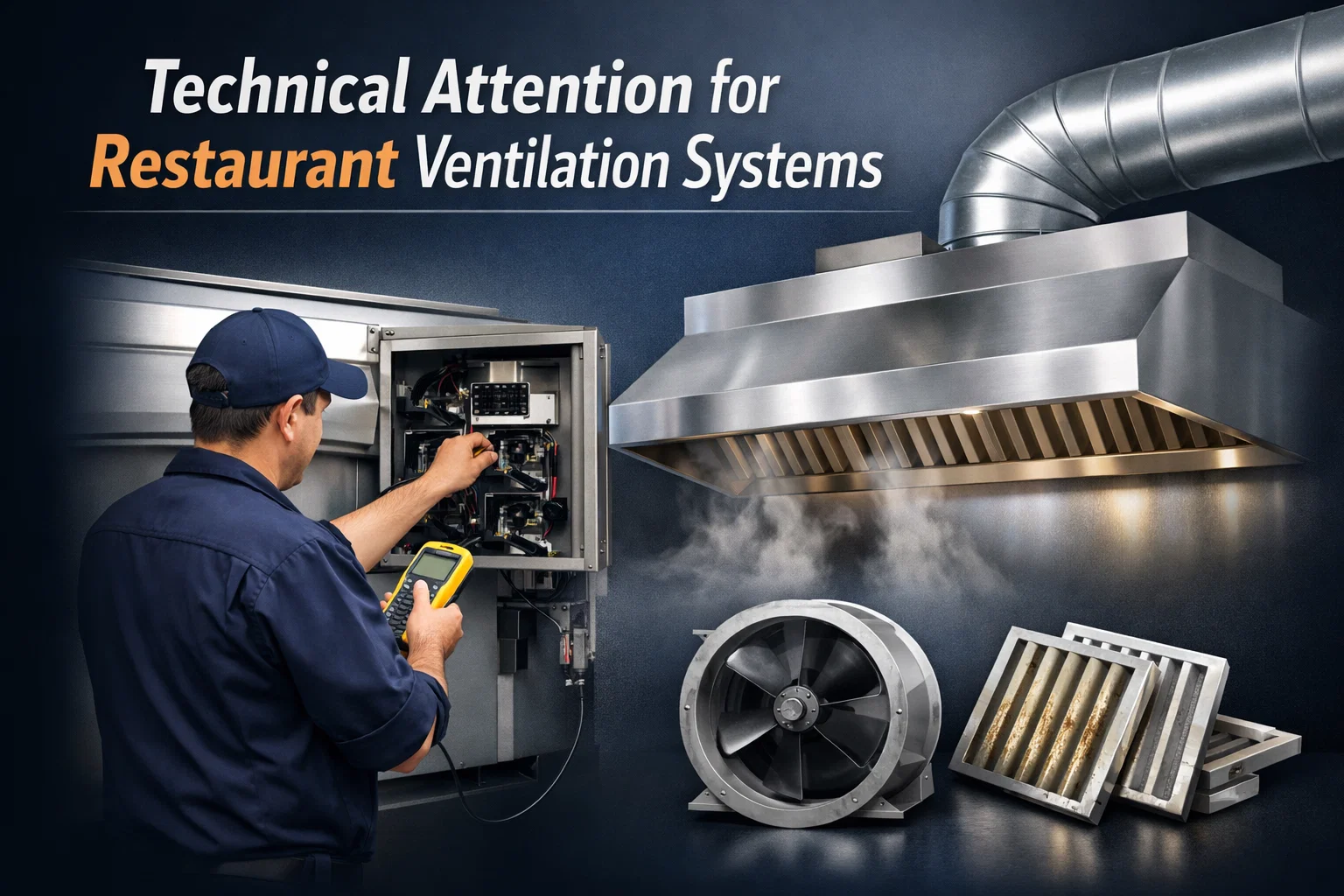
What if the most dangerous part of your kitchen is the one you rarely look at? Imagine a busy Friday night shift where the heat is rising, the orders are piling up, and suddenly, a small flare-up on the range turns into an unstoppable inferno within the walls. This isn't just a bad dream; it is a reality for kitchens that neglect the technical health of their exhaust systems.
You might notice the air getting thicker, the kitchen becoming unbearably hot, or a lingering smell that just won't go away. These are the silent cries for help from your ventilation. In this detailed article, we will break down the mechanics of air flow, the hidden dangers of grease accumulation, and why professional restaurant hood cleaning is the only way to safeguard your investment and your team.
The Anatomy of an Exhaust System
A restaurant ventilation system is more than just a metal box over the stove. It is a complex network designed to extract heat, smoke, and grease-laden vapors. The primary components include the hood canopy, the baffle filters, the internal ductwork, and the rooftop exhaust fan.
Each of these parts must work in harmony. If the filters are clogged, the fan has to work twice as hard, leading to mechanical failure. If the ductwork is coated in oil, it becomes a fuse waiting for a spark. Understanding this breathing system is the first step in maintaining a high-performance kitchen.
Why Surface Cleaning Isn't Enough
Many operators believe that wiping down the visible exterior of the hood keeps them safe. However, the real danger hides where the eyes can't see. Grease travels deep into the ducts and settles on the fan blades. This buildup:
-
Reduces the efficiency of air extraction.
-
Increases energy consumption as the motor struggles.
-
Creates a massive fire hazard that can bypass fire suppression systems.
A professional restaurant hood cleaning service doesn't just polish the stainless steel; it involves scraping and chemically treating the entire system down to the bare metal, ensuring every inch of the ductwork is clear of flammable residue.
Frequency and Compliance Standards
How often should you perform a deep clean? The answer depends on your cooking volume and the type of fuel you use. According to NFPA 96 standards, which are the benchmark for fire safety, different kitchens require different schedules:
-
Monthly: Systems using solid fuels like wood or charcoal.
-
Quarterly: High-volume kitchens, such as 24-hour diners or fast-food outlets.
-
Semi-Annually: Moderate-volume kitchens that operate on a standard schedule.
-
Annually: Low-volume operations like churches or seasonal snack bars.
Following these intervals ensures you stay compliant with local fire marshals and insurance requirements. Failing to produce a certificate of a recent restaurant hood cleaning can result in heavy fines or even the immediate closure of your business.
Technical Benefits of Professional Maintenance
Beyond fire safety, giving technical attention to your ventilation offers several operational advantages. When your system is clean, the air quality improves significantly. This creates a cooler, more comfortable environment for your chefs, which directly boosts productivity and morale.
Furthermore, a well-maintained fan lasts longer. Grease acts as a weight on fan blades, causing vibrations that wear out bearings and belts. Regular restaurant hood cleaning removes this weight, allowing the motor to spin freely and efficiently. This proactive approach saves thousands of dollars in emergency repair costs and premature equipment replacement.
The Inspection Checklist
When you hire experts for restaurant hood cleaning, they follow a rigorous process to ensure no corner is left untouched. A standard professional service includes:
-
Covering all kitchen equipment with plastic to prevent contamination.
-
Removing and soaking baffle filters in heavy-duty degreasers.
-
Scraping and power washing the vertical and horizontal ductwork.
-
Cleaning the rooftop exhaust fan and checking the fan belt.
-
Providing a detailed report and a compliance sticker for the hood.
Investing in this level of technical care is the only way to ensure your kitchen remains a safe harbor for your staff and a profitable venture for your future.

 English
 Arabic
 French
 Spanish
 Portuguese
 Deutsch
 Turkish
 Dutch
Dutch
 Italiano
 Romaian
 Portuguese (Brazil)
 Greek
Greek