
The Truth About Touchless Washes vs. Hand Wash Detailing
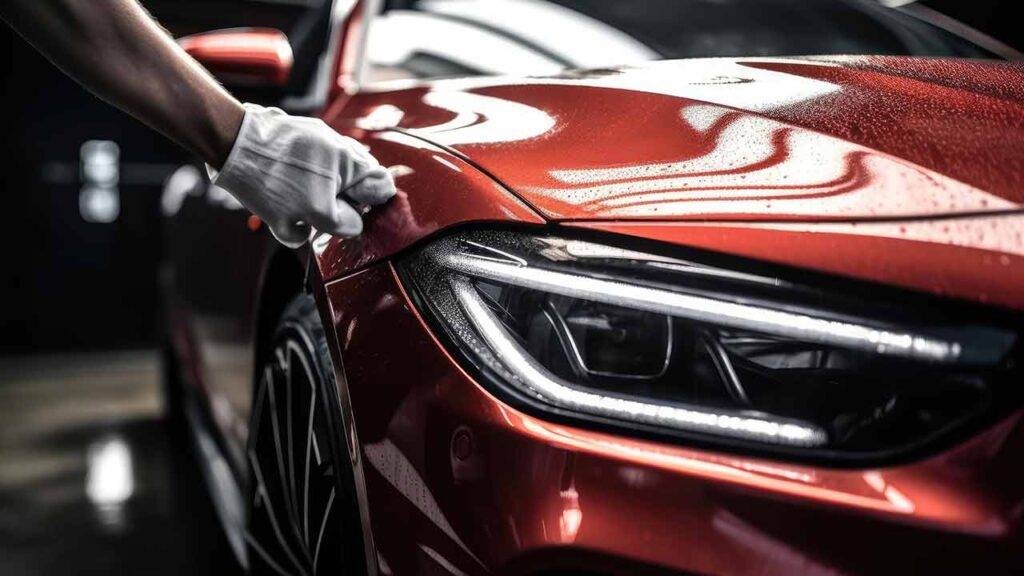
For the time-strapped car owner, the promise of a quick, automated clean is alluring. Drive-through car washes, particularly the "touchless" variety, market themselves as a safe, convenient solution. Meanwhile, the tradition of a meticulous hand wash represents the gold standard of care. But what is the real trade-off between speed and stewardship? Understanding the mechanics, chemistry, and results of each method is essential for making informed decisions about your vehicle's upkeep. While a touchless wash serves a specific, limited purpose, achieving true cleanliness, protection, and preservation requires the skilled approach of professional car detailing. For those seeking this higher standard without sacrificing convenience, the modern solution is found in the on-demand excellence of mobile car detailing, which brings the artisan hand wash directly to you.
Deconstructing the Touchless Car Wash
A touchless wash uses high-pressure water jets and strong chemical detergents—not physical brushes—to clean your car.
The Proposed Advantage:
-
No Physical Contact: The primary selling point is the elimination of brushes or cloth that could potentially scratch the paint. For a vehicle caked in heavy mud or salt where abrasion is a major concern, it can be a safer first rinse than a manual scrub.
The Hidden Realities & Drawbacks:
-
Chemical Warfare: To compensate for the lack of friction, touchless systems use highly alkaline, caustic soaps and "pH-busters" to break down dirt. These chemicals are effective but harsh. They systematically strip away any wax, sealant, or ceramic coating you have applied, leaving your paint completely unprotected. They can also degrade rubber trim, plastics, and cause clouding on headlights over time.
-
Ineffective Cleaning: The high-pressure water cannot remove bonded contaminants (brake dust, industrial fallout, tree sap). It blasts off loose dirt but leaves a film of grit and chemicals behind. Your car may look shiny from a distance but will feel rough to the touch—a sign of remaining contamination that will act as an abrasive in your next wipe-down.
-
Water Spot Havoc: Most systems use unfiltered, mineral-heavy water for their final rinse. This water is sheeted across the car and left to air-dry, almost guaranteeing water spots, especially in sunny or warm weather.
-
No Interior/Detail Care: The service is exclusively exterior, leaving interiors, wheels, tires, and door jambs neglected.
The Art & Science of Professional Hand Wash Detailing
A professional hand wash is a systematic, multi-step process designed to clean safely while preserving and enhancing your vehicle's surfaces.
The Core Principles:
-
Decontamination-First Mindset: The goal is not just to remove loose dirt, but to eliminate bonded contaminants. This often involves a pre-soak with a specific chemical decontaminant (like an iron remover) before any contact is made.
-
The Two-Bucket Method with Grit Guards: This is the non-negotiable standard. One bucket holds clean soapy water, the other holds rinse water. A grit guard at the bottom of each traps sediment, preventing it from being redeposited on the wash mitt. This single technique is the biggest defender against swirl marks.
-
pH-Neutral, Lubricating Chemistry: Professionals use shampoos that are gentle on coatings and trim, designed to lubricate dirt particles so they slide off without scratching.
-
Comprehensive Approach: A true detail wash includes wheels, tires, door jambs, and the engine bay (if requested). It concludes with a controlled dry using filtered air blowers and premium microfiber towels to prevent water spots.
-
Inspection & Protection: After washing, the paint is inspected. The service often concludes with the application of a spray wax or sealant to replenish protection.
The Verdict: Different Tools for Radically Different Jobs
It's not that one is universally "bad" and the other "good." They serve fundamentally different purposes.
When a Touchless Wash Might Be Acceptable:
-
As an emergency rinse in the dead of winter to blast off heavy salt and grime when a proper wash is impossible.
-
On a purely utilitarian, older vehicle where long-term paint preservation is not a priority.
When Professional Hand Detailing is Non-Negotiable:
-
For any vehicle where you wish to maintain its appearance and value.
-
Before or after applying any form of paint protection (wax, sealant, ceramic coating).
-
For routine maintenance that actually cleans and protects, rather than just making the car wet and chemically stripping it.
-
When you need interior cleaning, stain removal, or attention to details like wheels and trim.
The DetailFlow Hand Wash Standard: Convenience Meets Craft
DetailFlow’s standard exterior wash is a masterclass in the safe hand wash methodology, delivered with mobile convenience.
Our Process Eliminates the Touchless Compromise:
-
We Bring the Deionized Water: Our mobile systems often use deionized water for the final rinse, which leaves zero mineral deposits, eliminating the #1 cause of water spots.
-
Systematic Safety: We employ the two-bucket method, multiple specialized microfiber mitts (separate for paint, wheels, and lower panels), and air blowers as standard practice.
-
Beyond Wash-Only: Even our entry-level package includes tire dressing, window cleaning, and a door jamb wipe-down. It’s a holistic clean.
-
The Ultimate Convenience: You get the meticulous quality of a studio hand wash, but we perform it at your home or office. Your car is cleaned, dried, and protected in a single session without you ever leaving your door.
Making the Informed Choice for Your Investment
Viewing a touchless wash as equivalent to a professional hand wash is like comparing fast food to a chef-prepared meal. One is a standardized, chemical-heavy process for speed; the other is a customized, careful service for health and longevity.
For the long-term health of your vehicle's finish, interior, and overall value, the hand wash detail is the only legitimate choice for routine care. It is an investment in preservation, not just a purchase of a temporary shine. This commitment to superior, safe cleaning is now more accessible than ever, effectively removing the time barrier that once pushed people toward automated washes, thanks to the efficient, on-location model of premium mobile car detailing.
Frequently Asked Questions (FAQs)
Can't frequent hand washing still cause swirl marks?
If done incorrectly, yes. That’s why the professional methodology is critical. Using the two-bucket method, grit guards, clean high-pile mitts, and proper drying techniques makes a professional hand wash the safest possible method to clean your car, far safer than any automated alternative or an improper DIY wash.
Are "soft-touch" brush washes safer than touchless?
No, they are typically worse. While touchless uses harsh chemicals, soft-touch uses spinning brushes that hold dirt and grit from hundreds of previous cars, acting like sandpaper on your paint. They are a primary cause of swirl marks and clear coat scratches.
What about "waterless" or "rinseless" wash products?
These are excellent professional tools for maintenance between full washes. They use lubricating polymers to encapsulate dirt, allowing it to be safely wiped away with clean microfibers. This is a core technique in mobile detailing, especially in water-restricted areas or winter, and is far superior to a touchless wash.
How often should I get a professional hand detail vs. using a touchless?
A professional hand detail should be your primary washing method. Depending on your environment, every 2-4 weeks is ideal. A touchless wash should be used only as a rare, emergency rinse in circumstances where a proper detail is impossible (e.g., a cross-country road trip in winter).
Doesn't the high pressure from a touchless wash get the undercarriage cleaner?
It can rinse loose salt and dirt, but it's not a substitute for a dedicated undercarriage flush. For true undercarriage protection against corrosion, a specific, high-volume flush at a dedicated facility (or using an undercarriage sprayer during a mobile detail) is more effective.

 English
 Arabic
 French
 Spanish
 Portuguese
 Deutsch
 Turkish
 Italiano
 Russian
 Romaian
 Portuguese (Brazil)
 Greek
Greek