
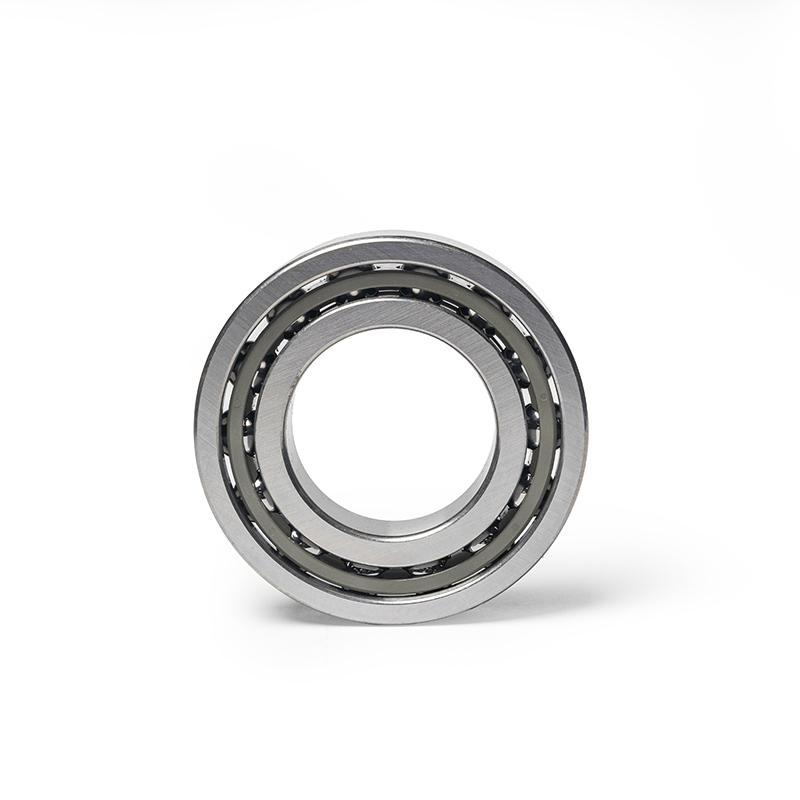
72 Series Angular Contact Bearing for Axial Loads
Industrial machinery today runs faster and carries heavier loads than ever before. Many systems not only deal with radial forces but also strong axial thrust. When bearings are not designed for these combined loads, the results include overheating, vibration, reduced accuracy, and frequent replacements.
In high-performance environments such as machine tools, pumps, and gear systems, bearing failure often starts with poor axial load handling.
Why Traditional Bearings Struggle
Deep groove ball bearings are widely used but mainly designed for radial loads. While they can handle small axial forces, they are not built for sustained thrust at high speeds.
Using multiple bearing types to compensate adds complexity and often leads to:
-
Increased heat buildup
-
Reduced rigidity
-
Misalignment risks
-
Shorter service life
Warning Signs of Bearing Overload
Engineers should watch for:
-
Unusual vibration patterns
-
Rising operating temperatures
-
Excessive noise during operation
-
Declining precision in rotating components
These signs often mean the bearing is overloaded in the axial direction.
The Solution: 72 Series Angular Contact Ball Bearing
A 72 angular contact ball bearing is designed specifically to handle higher axial loads while still supporting radial forces at elevated speeds.
What This Bearing Is
The 72 series features a larger contact angle than the 70 series. This design allows the bearing to transmit higher axial loads without sacrificing rotational stability. It is commonly used in paired or multi-row arrangements to increase system stiffness.
How It Manages Combined Loads
The angular contact design directs force through the balls along a specific angle. This improves:
-
Axial load capacity
-
Structural rigidity
-
High-speed performance
As a result, machines can operate more reliably under demanding conditions.
Key Features That Improve Reliability
Larger Contact Angle for Axial Strength
A greater contact angle means better support for thrust loads. This makes the 72 series ideal for applications where axial forces are significant and continuous.
Precision Build for Reduced Heat and Vibration
Performance also depends on manufacturing quality. Key features include:
-
Tight internal tolerances
-
Smooth raceway finishing
-
Optimized ball geometry
-
Preload capability for rigidity
These factors reduce friction, vibration, and operating temperature.
Comparison with Other Bearing Types
| Feature | Deep Groove Ball Bearing | 70 Series Angular Contact | 72 Series Angular Contact |
|---|---|---|---|
| Axial Load Capacity | Low | Medium | High |
| Speed Capability | Moderate | Very High | High |
| Rigidity | Low | Medium | High |
| Best For | Radial loads | High speed precision | Combined loads with thrust |
This comparison shows why the 72 series is preferred when axial loads are a major concern.
Where 72 Series Bearings Are Used
Vertical Machine Tool Spindles
Vertical spindles experience constant axial forces from cutting operations. Strong axial support improves machining accuracy.
Gearboxes and Power Transmission
Helical gears create axial thrust. Bearings must manage this load to maintain alignment and efficiency.
Industrial Pumps Under Axial Thrust
Pump impellers generate thrust that can shorten bearing life if not properly supported.
In these demanding systems, the 72 angular contact ball bearing provides stable and long-lasting performance.
Why Manufacturers Choose This Bearing Series
Manufacturers prefer this series because it offers a strong balance of speed capability and axial strength. It reduces downtime and supports precision operation.
Key benefits include:
-
Higher thrust load capacity
-
Improved system rigidity
-
Lower vibration levels
-
Extended maintenance intervals
These advantages directly improve production efficiency.
How to Select the Right Bearing
Load Direction and Speed Requirements
Engineers should analyze:
-
Maximum axial and radial loads
-
Operating speed range
-
Required rigidity
-
Installation space
Mounting, Preload, and Lubrication
Correct preload improves stiffness and accuracy. Proper mounting prevents misalignment, and suitable lubrication controls heat and wear.
Working with an experienced bearing supplier ensures correct specification and long-term reliability.
Conclusion
When machines operate under significant axial forces, standard bearings often fail too soon. The 72 series angular contact ball bearing provides the strength, precision, and reliability needed for demanding industrial environments. For engineers and manufacturers, it is a practical solution that improves performance while reducing downtime.

 Arabic
 French
 Spanish
 Portuguese
 Deutsch
 Turkish
 Dutch
Dutch
 Italiano
 Russian
 Romaian
 Portuguese (Brazil)
 Greek
Greek