
Bridging Lunar Tradition With Today’s Calendar System
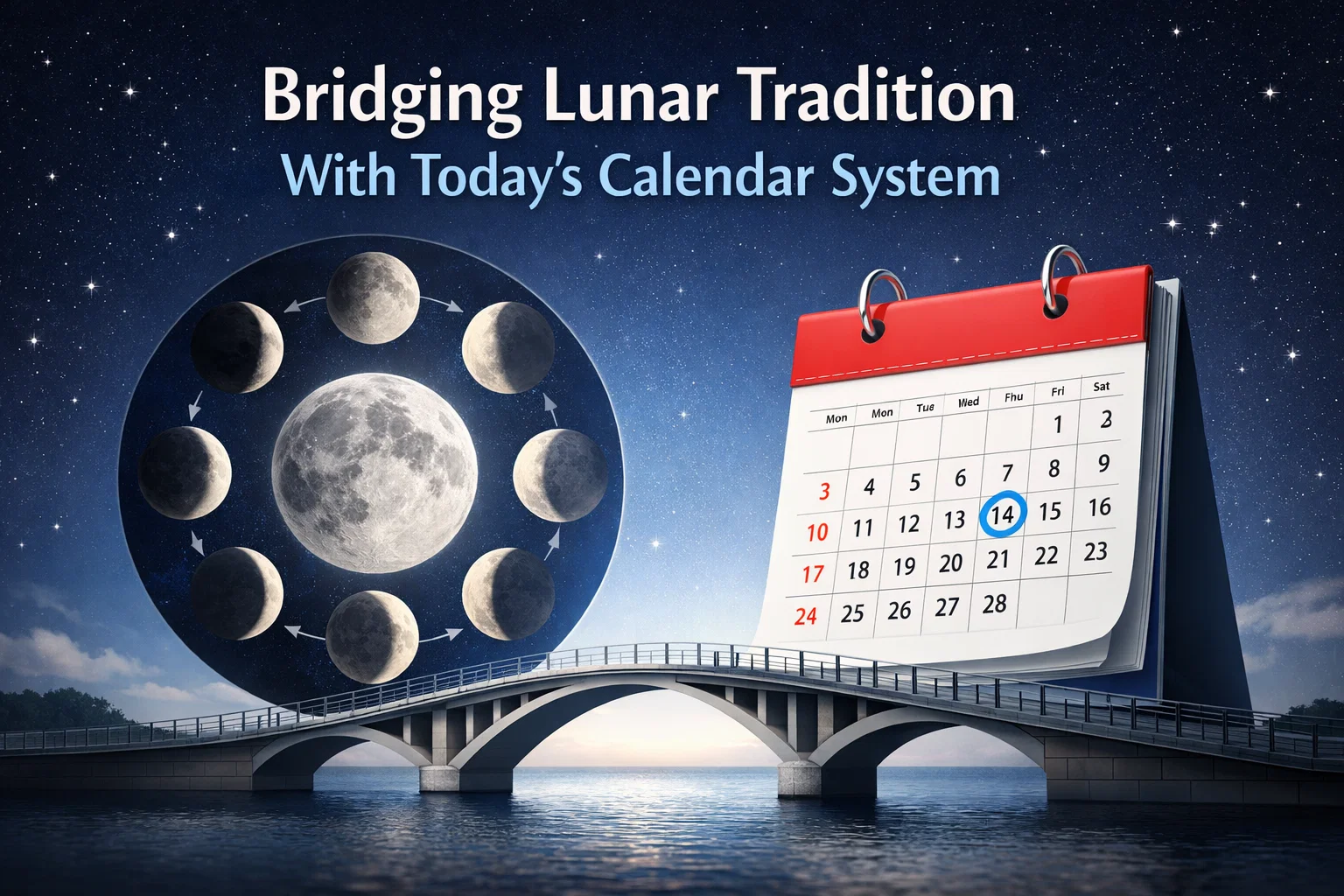
What if you woke up tomorrow and found that your most important dates birthdays, anniversaries, or religious holidays had shifted by eleven days? Can you imagine the confusion of trying to coordinate a global meeting when your local clock follows the moon while the rest of the world follows the sun? This is the daily reality for millions navigating the gap between two distinct timekeeping systems. The struggle to synchronize traditional religious observances with modern professional schedules often leads to missed deadlines, double-booked events, and the frustration of manually calculating dates that never seem to stay put.
In this detailed article, we explore the solution to these chronological hurdles. By understanding the mechanics of islamic to gregorian calendar transitions, you will learn how to bridge the gap between lunar tradition and solar practicality. We will break down the history, the math, and the modern tools that make staying on track simpler than ever before.
The Fundamental Shift: Moon vs. Sun
At the heart of the confusion lies a celestial difference. The Gregorian calendar is solar-based, tracking the Earth's 365-day journey around the sun. In contrast, the Islamic (Hijri) calendar is purely lunar, relying on the cycles of the moon. This creates a natural drift because a lunar year is approximately 354 days long.
Because the lunar year is about 11 days shorter, Islamic months rotate through the Gregorian seasons over a 33-year cycle. This is why Ramadan can fall in the heat of July one decade and the chill of December a few decades later. Understanding this shift is the first step in mastering islamic to gregorian calendar alignment.
Why Conversion is Essential Today
In our interconnected world, being bilingual in timekeeping is no longer just a religious requirement; it is a practical necessity. Whether you are a business professional working in the Middle East or a student planning travels around Eid, you need a reliable way to translate dates.
-
Global Business:
Coordinating contracts and project deadlines across regions like Saudi Arabia, which uses both systems. -
Travel Planning:
Ensuring your flights don't clash with major holidays that close down local transport. -
Historical Research:
Accurately dating ancient manuscripts or family records that were originally written in Hijri. -
Religious Observance:
Knowing exactly when to start fasting or when to prepare for the Hajj pilgrimage.
Navigating the History of Both Systems
The Gregorian system was introduced in 1582 by Pope Gregory XIII to correct errors in the older Julian calendar. It is designed to keep the spring equinox on March 21st, making it highly stable for agriculture and the global economy. It is the civil standard for most of the world.
The Hijri calendar began in 622 CE, marking the Prophet Muhammad’s migration (Hijrah) from Mecca to Medina. It isn't just a way to count days; it is a spiritual map. Every month begins with the sighting of the new crescent moon, which adds a layer of beautiful, natural variability to the system.
How to Convert Islamic to Gregorian Calendar Dates
While there are complex mathematical formulas involving leap years and moon cycles, most people today prefer simplified methods. Here is how you can manage the transition:
-
Use Digital Tools:
Modern apps and websites provide instant conversion based on the Umm al-Qura or Tabular algorithms. -
The 33-Year Rule:
Remember that the Hijri calendar catches up to the Gregorian calendar by about one year every 33 solar years. -
Check Local Sightings:
For religious purposes, always remember that a date might shift by 24 hours depending on when the moon is actually seen.
Living Between Two Worlds
Bridging these two systems allows you to honor your heritage while remaining efficient in a fast-paced world. By using a reliable islamic to gregorian calendar converter, you remove the guesswork from your schedule. You can plan your year with confidence, knowing exactly where the spiritual and the professional intersect.
Time is our most valuable resource. Whether you are tracking the sun or the moon, the goal is the same: to make every day count. Understanding how these calendars work together ensures that you never miss a moment that matters, regardless of which system you use to measure it.

 Arabic
 French
 Spanish
 Portuguese
 Deutsch
 Turkish
 Dutch
Dutch
 Italiano
 Russian
 Romaian
 Portuguese (Brazil)
 Greek
Greek