
ai industrial automation
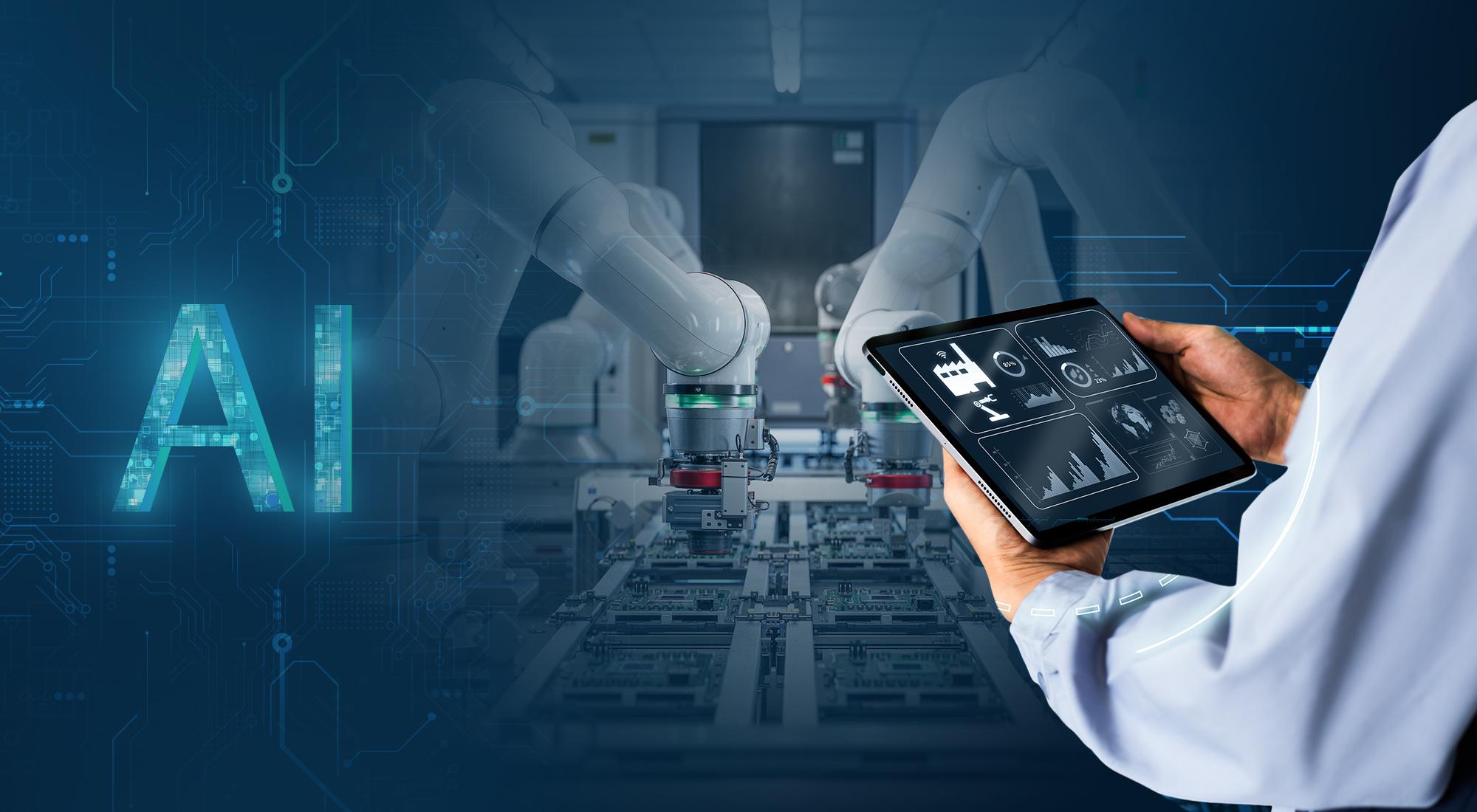
AI in Industrial Automation | Boost Efficiency & Smart Manufacturing
Industrial automation is changing the way factories and manufacturing plants operate, and Artificial Intelligence (AI) is leading this transformation. Today, industries are moving beyond traditional machines and manual processes to smart, connected, and intelligent systems.
AI in industrial automation helps businesses improve efficiency, reduce errors, and increase productivity. Modern technologies like AI automation, AI voice agents, and AI chatbots are making industrial operations faster, safer, and more accurate.
What Is AI in Industrial Automation?
AI industrial automation involves using intelligent machines and software that can learn from data, analyze patterns, and make decisions automatically. Unlike traditional automation, which follows pre-programmed instructions, AI can adapt to changes, optimize processes, and continuously improve performance.
By collecting data from machines, sensors, and production lines, AI can identify inefficiencies, predict failures, and help managers make better decisions.
How AI Boosts Smart Manufacturing
Smart manufacturing combines AI, automation, and connected devices to create factories that respond intelligently to data. In these environments, machines communicate with each other, share insights, and adjust processes in real time.
Key benefits of AI-powered smart manufacturing include:
-
Real-time monitoring of production lines
-
Reduced machine downtime
-
Improved product quality
-
Quick adjustments to meet changing demand
This leads to higher efficiency, lower costs, and more reliable operations.
Benefits of AI in Industrial Automation
1. Increased Efficiency
AI automation helps streamline industrial processes, reduces manual intervention, and ensures machines operate continuously. This increases production speed and consistency.
2. Predictive Maintenance
AI analyzes machine performance to predict potential failures before they happen. This reduces unplanned downtime and lowers maintenance costs.
3. Quality Control
AI-powered vision systems can detect defects and inconsistencies in real time, ensuring better product quality and minimizing waste.
4. Cost Savings
By reducing energy consumption, material waste, and production delays, AI helps companies save money in the long term.
5. Enhanced Safety
AI monitors hazardous environments, identifies risks, and alerts employees, creating safer workplaces.
AI Automation in Industrial Processes
AI automation connects machines, software, and data to automate complex industrial operations intelligently.
Common applications of AI automation include:
-
Robotic arms that adjust movements automatically
-
Production lines that optimize speed and output in real time
-
Smart inventory and supply chain systems
These solutions allow industries to scale operations while maintaining quality, precision, and efficiency.
Role of AI Voice Agents in Manufacturing
AI voice agents are transforming how employees interact with machines in industrial settings. They allow workers to issue commands and receive updates through voice, which is especially helpful when hands are busy or environments are noisy.
Uses of AI voice agents include:
-
Hands-free machine operation
-
Real-time alerts and notifications
-
Voice-guided instructions for maintenance tasks
This improves productivity, reduces errors, and helps employees work safely.
How AI Chatbots Support Industrial Teams
AI chatbots help improve communication, training, and support within industrial organizations. They provide instant assistance and reduce the burden on human staff.
AI chatbots are used for:
-
Employee support and internal FAQs
-
Maintenance guidance and troubleshooting
-
Training new employees
-
Process and system inquiries
By offering fast and accurate answers, AI chatbots help maintain smooth operations and informed decision-making.
Real-World Applications of AI in Industrial Automation
Industries across the globe are already leveraging AI:
-
Manufacturing: Smart robotics, predictive maintenance, and quality inspection
-
Automotive: Intelligent assembly lines and defect detection
-
Energy: Equipment monitoring, smart grids, and efficiency optimization
-
Logistics: Automated warehouses, smart route planning, and inventory management
These examples highlight how AI is transforming traditional industries into smart and efficient operations.
Challenges of Implementing AI
Despite its advantages, industries may face challenges in adopting AI:
-
High upfront investment
-
Data privacy and security concerns
-
Need for skilled professionals
These challenges can be managed by starting with small AI projects, training employees, and partnering with experienced solution providers.
The Future of Smart Manufacturing with AI
The future of industrial automation is intelligent and data-driven. With advances in AI technology, industries can expect:
-
Fully autonomous and optimized factories
-
Faster and smarter decision-making
-
Greater integration of AI voice agents and AI chatbots
-
Sustainable manufacturing practices through resource optimization
Businesses that embrace AI early will gain a strong competitive advantage and be ready for a rapidly evolving market.
Frequently Asked Questions (FAQs)
What is AI in industrial automation?
AI in industrial automation uses intelligent systems to analyze data, control machines, and optimize industrial processes automatically.
How does AI boost smart manufacturing?
AI increases efficiency, reduces downtime, ensures consistent quality, and allows factories to respond quickly to changing demands.
Is AI automation suitable for small industries?
Yes, AI automation can be scaled to fit small and medium-sized industries, making production more efficient and cost-effective.
How are AI voice agents used in factories?
AI voice agents provide hands-free machine control, real-time alerts, and voice-guided instructions for employees.
Can AI chatbots improve industrial operations?
Yes, AI chatbots assist employees with queries, maintenance guidance, and training, improving overall efficiency.
Conclusion
AI in industrial automation is transforming modern manufacturing. By implementing AI automation, industries can boost efficiency, reduce costs, and improve safety. Tools like AI voice agents and AI chatbots further support employees by enhancing communication, training, and operations.
Investing in AI today allows businesses to build smart and intelligent manufacturing systems, stay competitive, and prepare for a future where industrial operations are faster, safer, and more responsive than ever.

 English
 Arabic
 French
 Spanish
 Portuguese
 Deutsch
 Turkish
 Dutch
Dutch
 Russian
 Romaian
 Portuguese (Brazil)
 Greek
Greek